General Inquiries: (587) 333-6349 - info@sanostate.com

Which Treatment Should I Try?
"The goal isn’t to fit you into a treatment. It’s to fit the treatment to you."
rTMS, Neurofeedback, PEMF, qEEG: How Do They All Fit Together?
If you’ve been looking into what we do at Sano State, you’ve probably noticed we don’t just offer one type of treatment.
We use:
rTMS (Exomind)
Neurofeedback
PEMF (Bellabee)
qEEG brain mapping
And alongside those, we also incorporate other supports like talk therapy, photobiomodulation, and biofeedback when they make sense.
At first glance, that can feel like a lot.
Are these all doing the same thing?
Do you need all of them?
Or is one better than the others?
The reality is, each one plays a different role.
qEEG: Understanding the Brain First
Before getting into treatments, it’s important to start here, with qEEG. That’s how we’re doing things at our clinics.
Importantly: qEEG is not a treatment, it is an assessment tool.
It allows us to measure brain activity and see how different areas are functioning. That gives us insight into patterns related to things like:
Mood
Focus
Regulation
Overactivity or underactivity in certain regions
Instead of guessing, we’re working from actual data. Everything else we do is built on top of that.

Neurofeedback: Training the Brain
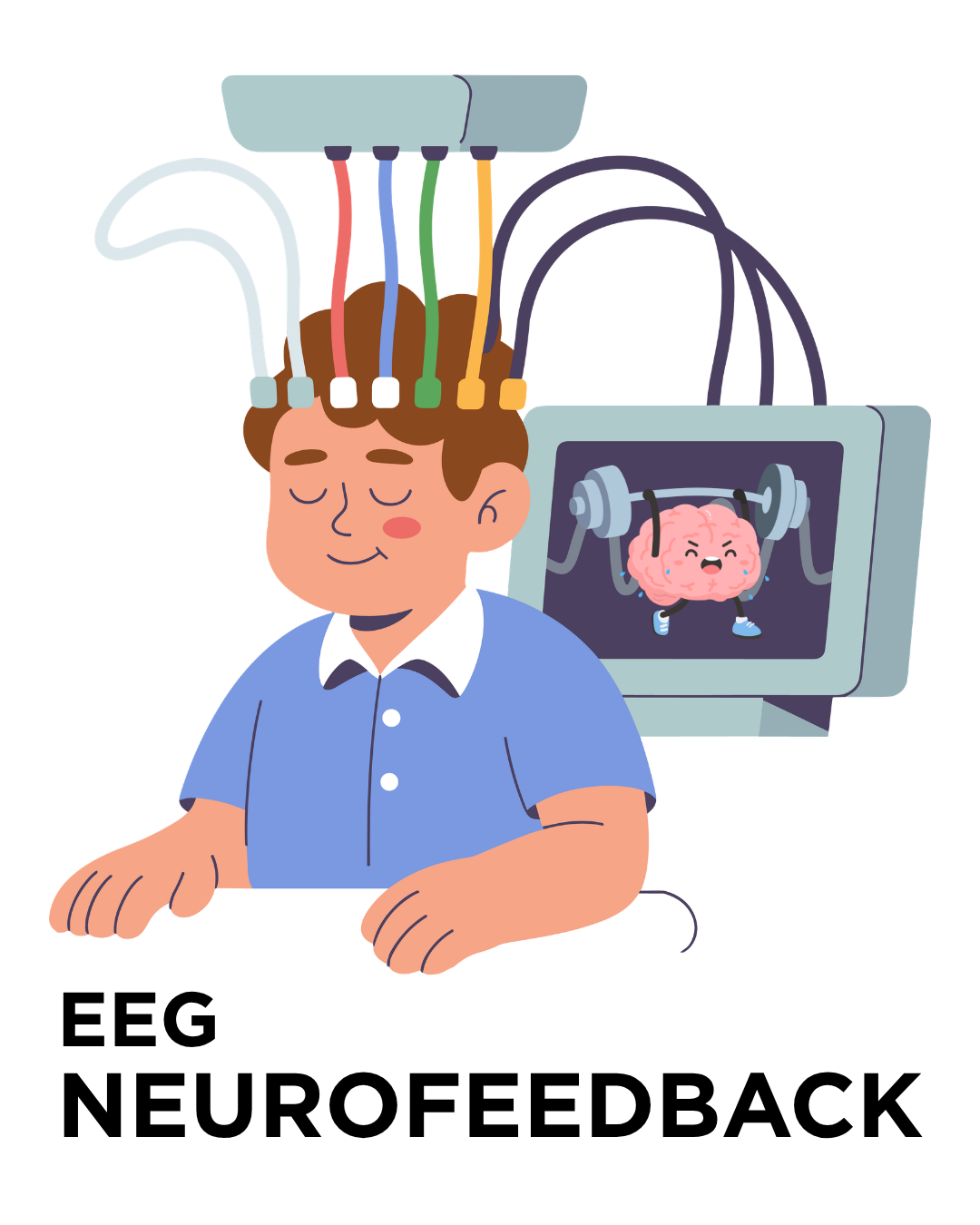
Neurofeedback is about helping the brain learn. It’s a training process.
We monitor brain activity in real time and give feedback that helps the brain move toward more optimal patterns.
Over time, the brain starts to regulate itself better.
This is often useful when:
There are long-standing patterns that need to change
Regulation is inconsistent
You’re looking for more stable, long-term improvements
It’s not the fastest kind of treatment, but it builds and lasts.
rTMS: Stimulating the Brain
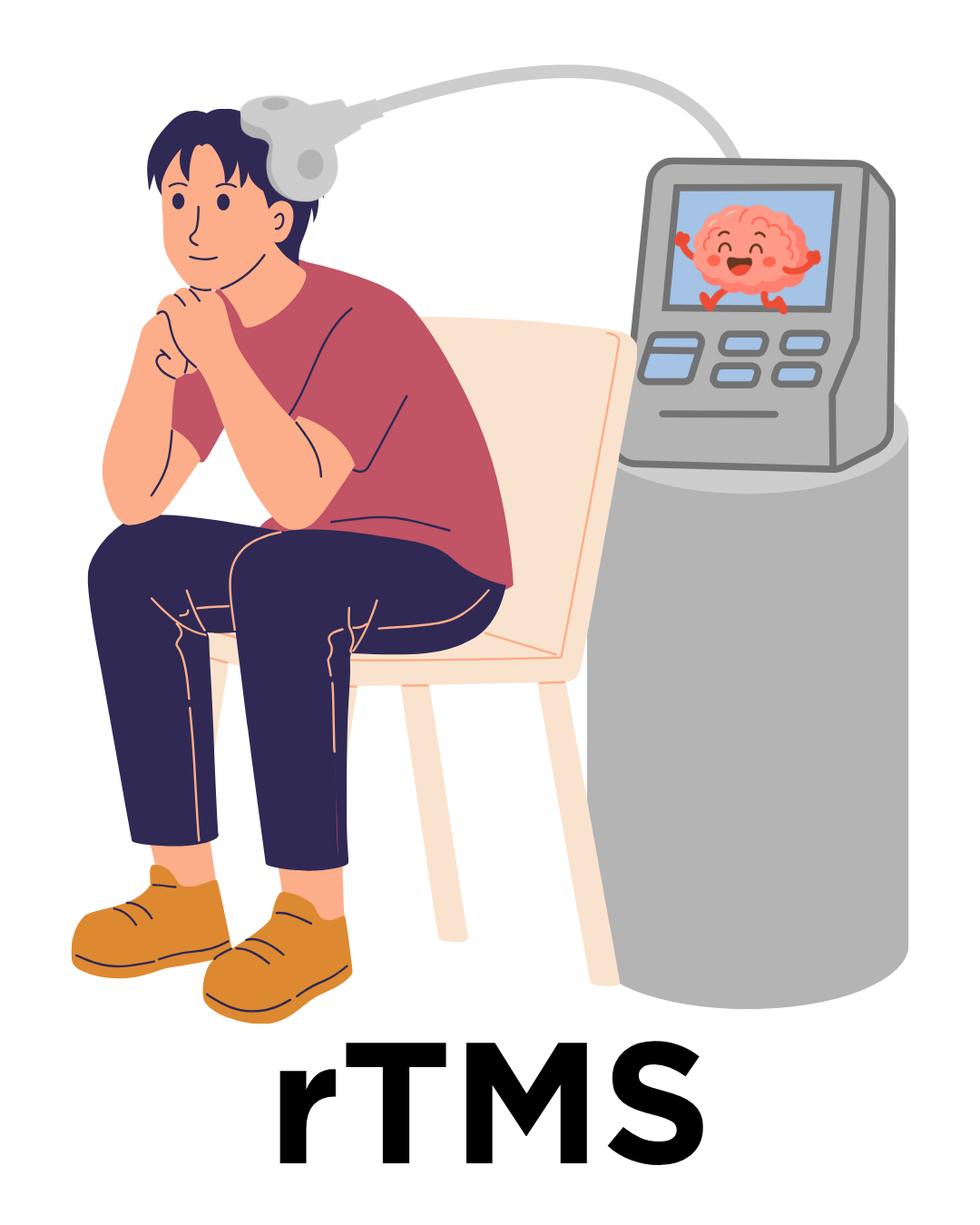
rTMS takes a different approach.
Instead of training the brain, it stimulates specific areas directly using magnetic pulses.
That stimulation can help:
Activate underperforming regions
Shift brain activity more quickly
Create movement when things feel stuck
With the Exomind system, this is done in a way that is much more comfortable than older rTMS approaches.
rTMS can be a strong option when:
Progress has stalled
Symptoms feel more “locked in”
Or a more direct intervention is needed
PEMF (Bellabee): Supporting the System
PEMF works a bit differently from both neurofeedback and rTMS.
It uses pulsed electromagnetic fields to support cellular and nervous system function. These are given at a power far, far lower than rTMS.
Rather than targeting one specific brain region, it works more broadly to:
Support regulation
Improve recovery
Reduce stress on the system
This can make it a useful complement to other treatments. Or it can be used to help achieve specific states, like a state of meditation, focus, or sleep. In many cases, it helps the brain and body become more receptive to change.
How These Work Together
This is where most people get tripped up.
These are not competing treatments. They’re different tools that can be used in different ways.
For example:
qEEG helps us understand what’s going on
rTMS can help create change in targeted areas
Neurofeedback can help train and stabilize those changes
PEMF can support the system overall
And when needed, we layer in other supports like counselling or biofeedback to address the psychological and physiological side of things.
Depending on the person, we might use:
One approach
A combination
Or a sequence over time
Why We Don’t Take a One-Size-Fits-All Approach
There are standardized protocols for many of these treatments, and those are important.
But the challenge is that people don’t all have the same brain patterns. We often find that two people can have the same diagnosis and very different underlying brain activity.
That’s why we start with assessment and build from there.
The goal isn’t to fit you into a treatment. It’s to fit the treatment to you.
So… Which One Do You Actually Need?
That depends on your brain.
In general:
If you want to understand what’s going on → qEEG
If the brain needs training → neurofeedback
If the brain needs more direct activation → rTMS
If the system needs support and regulation → PEMF
But most people don’t fall into just one category.
That’s why having multiple options matters.
The Bottom Line
These aren’t competing approaches. They’re different ways of working with the same system.
We take pride in our ability to provide a multifactor approach. The key is knowing when and how to use each one.
If you're interested in one, or all, of our treatments, the easiest way to learn more is to reach out. Send us a text. Give us a call. Pop into the closest office. We are happy to arrange time to explain in detail and find the best fit for you.
587-333-6349


General Inquiries:
Our Locations:
Additional Resources:
About Us:
We strive for excellence in psychological treatment. We are committed to providing professional, caring, innovative, and research-based services.
© 2024 Sano State Taylored Psychology. All Rights Reserved.