General Inquiries: (587) 333-6349 - info@sanostate.com

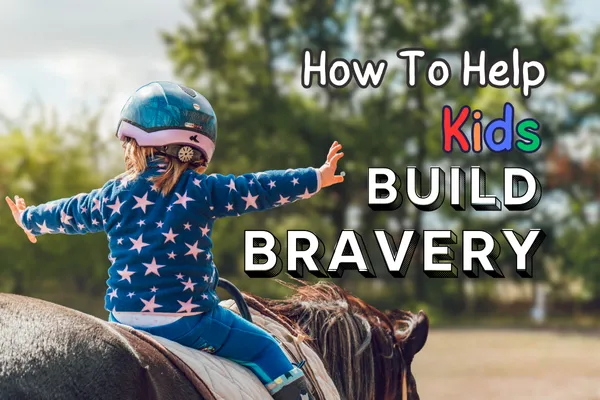
How To Help Kids Build Bravery
"Our goal isn’t to eliminate discomfort. It’s to help children understand it and build a bridge from, “I feel something”, to, “Here’s what I can do about it."
- Kayla Taylor, R.Psyc.
Helping Children Build Emotional Awareness and Coping Skills

The other day in my office, I watched a familiar interaction between a parent and child. After a brief check-in at the start of the session, the parent stepped toward the door. The child instantly grew anxious, shoulders up, eyes down, body quietly turning inward. Seeing this, the parent offered a well-intentioned, “It’s okay, I’ll be right out there,” and left.
It’s an interaction all parents (myself included) recognize. These words come from a place of love and an instinct to reassure. But the phrase “It’s okay” often skips over the child’s internal experience. And when a child learns to override their inner signals in favor of external reassurance, they lose valuable opportunities to understand, name, and cope with their feelings.
Decades of psychological research confirm that people find greater meaning in conclusions they arrive at themselves (versus ones that come from others). The same holds true for emotional development. When adults help children access and explore their internal world, children learn not just to “be okay,” but how to get themselves there.
Here are supportive strategies that help children name their feelings, connect with their bodies, and develop their own effective coping strategies.
1. Get Curious About Their Internal Experience
Instead of smoothing over the feeling with reassurance, help the child tune into their body and emotions. This builds interoceptive awareness, something highly correlated with emotional regulation later in life.

To help build this connection for them, try:
Asking what they feel inside.
Reflecting back what you notice.
Naming body sensations (“I see your hands are tight—are they feeling squishy or shaky?”).
Example:
Parent: “Your shoulders got small and your eyes looked down when I stood up. What are you feeling happening in your body right now?”
Child: “My tummy feels twisty.”
Parent: “Twisty tummies can happen when something feels new or unsure.”
This simple exchange validates the child’s experience and shows them how to check in with themselves.
2. Support Them in Problem-Solving
Hard or intense feelings aren’t problems, but they are uncomfortable. Children benefit from learning how to help themselves feel safer, calmer, or more confident.
To help build problem solving skills, try asking what would help them feel more okay, which puts them in the driver’s seat.
Example:
Parent: “So your tummy feels twisty. What do you think might help it feel a little better while I step out?”
Child: “Maybe… holding something?”
Parent: “Great idea. Want to pick something from your bag or from the shelf?”
This model’s brainstorming and agency, skills they’ll rely on for a lifetime.
3. Set Gentle Boundaries While Staying Emotionally Present
Sometimes, the child says, “I’m scared and want you to stay” and you simply can’t. At these moments, you can hold the boundary while still honoring their emotions.
Try language like:
“I know it can feel scary to do something on your own. Since I can’t stay, what can we come up with to help you feel more calm or confident?”
If their fear is too big to think clearly, offer two thoughtful choices. Choice-giving supports autonomy and creates a bridge toward independence.

Example:
Parent: “I won’t be staying in the room, but I’ll be waiting right out front. Would you like to keep my scrunchie bracelet with you to remember I’m close, or would you like me to draw you a picture while I wait so you can see it when you finish?”
These small symbolic connections help soothe attachment anxiety and show the child they remain connected even during separation.
Keep in mind that sometimes they key player in these circumstances is uncertainty anxiety. Kids often behave differently simply because they don’t know what to expect. A plan can make all the difference.
Example:
Parent: “Are you unsure what you will be doing with Kayla while I wait?”
Child nods.
Parent: “That makes sense. Not knowing can feel scary. Let’s make a plan together.”
When children understand what will happen and when, their nervous system can settle. Later, once the child feels secure, you can teach flexibility which helps them tolerate small changes in plans and builds resilience over time.
Another Important Point about Emotional Regulation
As adults, many of us struggle to name our own feelings beyond “sad,” “mad,” or “okay.” Children learn emotional language from the adults around them, so the more precise we are, the better equipped they become.
Instead of “scared,” a child might feel:
Uncertain
Overwhelmed
Surprised
Nervous
Shy
Unsure
Conflicted
Anxious
Helping them identify nuances allows them to make sense of what’s happening inside and communicate it.

Why “It’s Okay” Can Be a Mismatch

When a child’s internal experience is “I’m scared,” and the adult says “You’re okay,” it creates a subtle disconnect.
Because the parent is wiser, older, and deeply loved, the child wants to believe them. But the child doesn’t feel okay, so they learn to ignore their body cues, to override themselves, or to smile and push through for the parent’s sake.
Over time, this can contribute to people-pleasing, emotional suppression, disconnection from bodily signals, and difficulty recognizing their own limits. Our goal isn’t to eliminate discomfort. It’s to help children understand it and build a bridge from, “I feel something”, to, “Here’s what I can do about it.”
Children grow emotionally stronger not when we tell them they’re okay but when we help them discover how to become okay. We can do this by getting curious about their inner world, helping them name what they feel, and supporting them in coping strategies. These practices model for them what they can eventually learn to do for themselves! These are small shifts with lifelong impact. And the beautiful thing is: you don’t have to do it perfectly or all of the time. Just remember to stay curious, stay connected, and keep practicing!
Looking for additional support? We offer Neurofeedback Therapy and Counselling services. 💙 Connect with us at 587-333-6349
References
Apodaca, T. R., & Longabaugh, R. (2009). Mechanisms of change in motivational interviewing: A review and preliminary evaluation of the evidence. Addiction, 104(5), 705–715.
Bruner, J. S. (1961). The act of discovery. Harvard Educational Review, 31(1), 21–32.
Miller, W. R., & Rollnick, S. (2013). Motivational interviewing: Helping people change (3rd ed.). Guilford Press.
Murphy, J., Catmur, C., & Bird, G. (2019). There is a relationship between interoception and emotion: Evidence from multiple methods. Cognition and Emotion, 33(1), 130–142
Pace, S. A., & Thwaites, R. (2019). Interoception and emotion regulation: A developmental perspective. Developmental Review, 54, 100872.
Park, C. L. (2010). Making sense of the meaning literature: An integrative review of meaning-making and its effects on adjustment to stressful life events. Psychological Bulletin, 136(2), 257–301.
Ryan, R. M., & Deci, E. L. (2017). Self-determination theory: Basic psychological needs in motivation, development, and wellness. Guilford Press.


General Inquiries:
Our Locations:
Additional Resources:
About Us:
We strive for excellence in psychological treatment. We are committed to providing professional, caring, innovative, and research-based services.
© 2024 Sano State Taylored Psychology. All Rights Reserved.